
Nikro Air Duct Cleaning in Studio City: A Homeowner’s Guide
Most homeowners who ask about Nikro equipment have already heard the name from a contractor and want to know whether it’s real or just a logo on a van. So here’s the short answer: Nikro builds professional-grade negative-pressure duct cleaning machines, and a Nikro HEPA unit can pull well over 2,000 CFM through a residential system. That number means nothing, though, if the technician doesn’t seal the system before switching it on. If you’d rather skip the homework and talk to someone, call (855) 658-5111.
Key Takeaways
- Nikro machines work by creating negative pressure inside the duct system, so debris moves toward the vacuum instead of into your rooms.
- The equipment only performs as well as the setup around it: sealed registers, intact filter gaskets, correct tool for the duct material.
- Studio City homes built from the 1960s through the 1980s often have flex duct runs, which need different tools than rigid sheet metal.
- Nikro equipment cleans. It does not repair collapsed ductwork or treat active biological growth, and any contractor who claims otherwise is overselling.
How does a Nikro negative air machine actually clean a duct system?
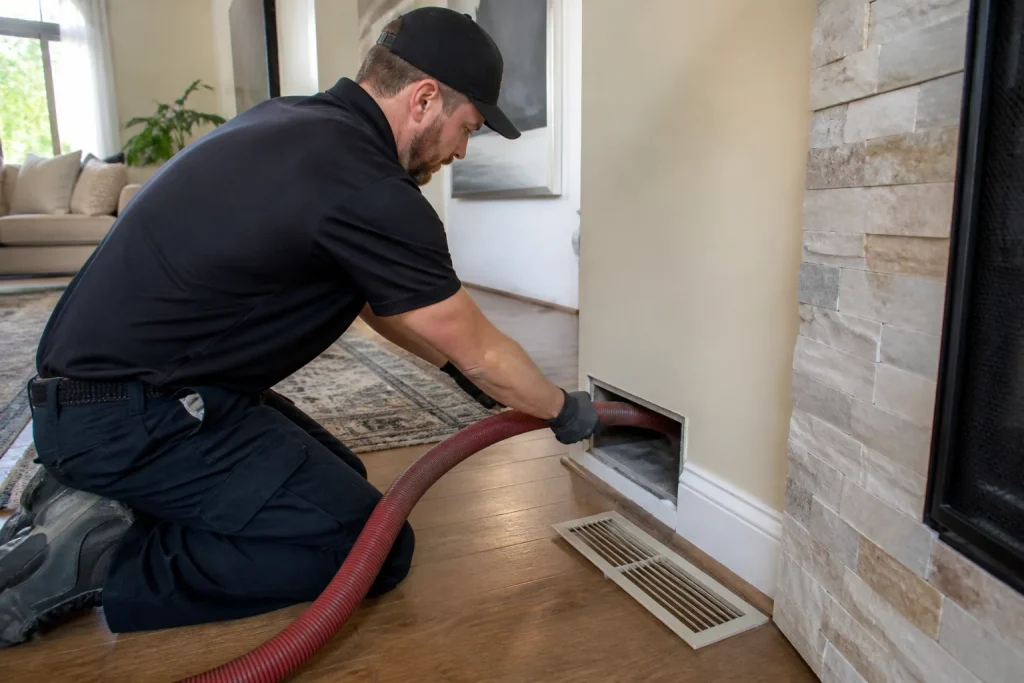
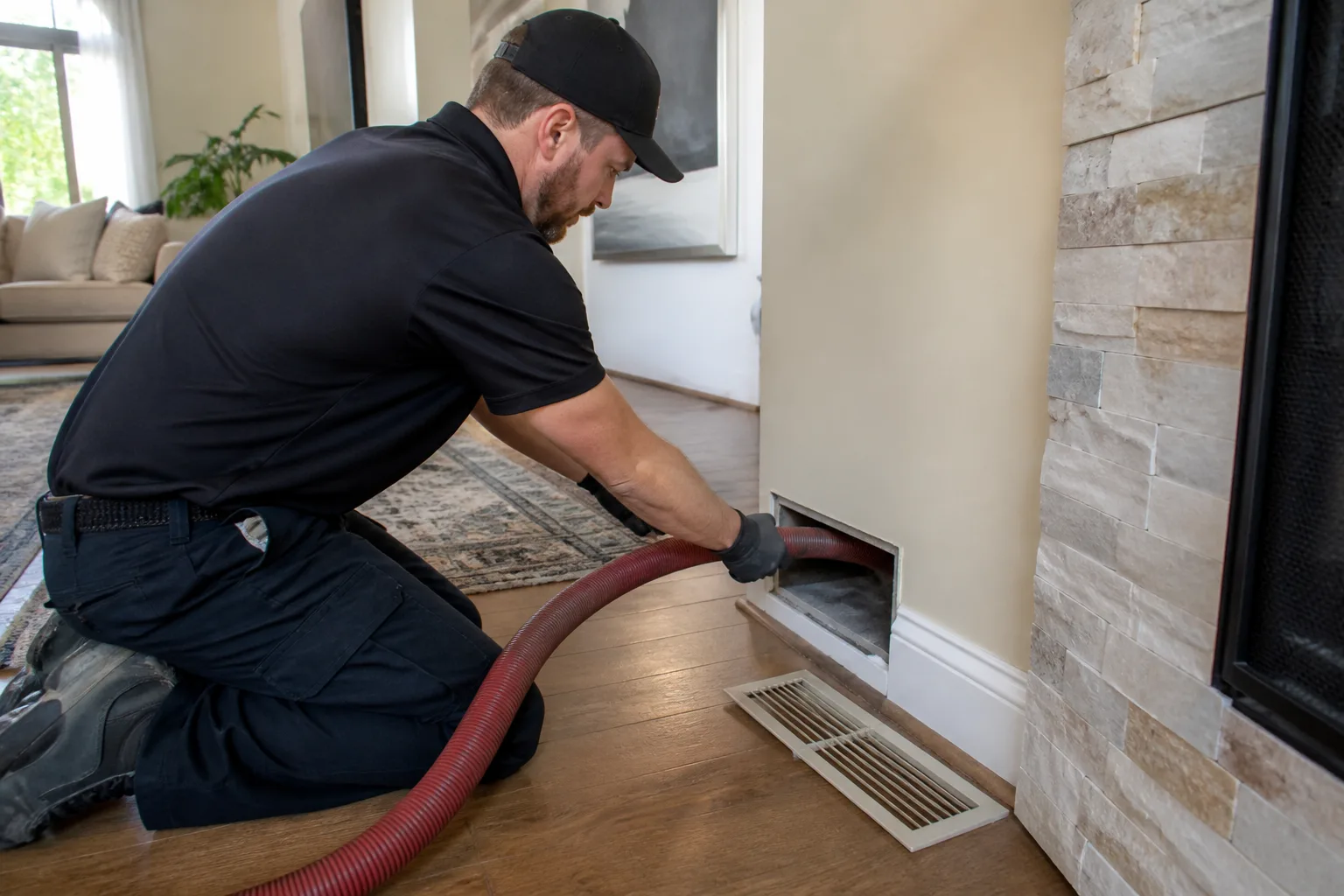
A Nikro negative air machine works by lowering the pressure inside your duct system so that every opening pulls air inward. The technician connects the machine’s hose to a central point, seals off the registers except the one being worked, and then uses an air whip or rotary brush to loosen debris from the duct walls. Because the pressure inside the duct is lower than the pressure in your living room, loosened dust travels toward the machine instead of drifting out through a vent and settling on your furniture.
That pressure differential is the entire mechanical principle. A shop vacuum creates suction at one small opening, but it can’t depressurize a whole duct system. A wand-and-blow approach does the opposite: it pushes air through the ducts and relies on luck and open windows to carry the debris out. In our experience, the difference shows up in what comes out of the machine’s collection bag, and in how much dust is still sitting on the shelf tops afterward.
The Nikro design also matters at the exhaust. Air leaving the machine passes through HEPA filtration before it returns to the room, which is the reason a properly set-up job doesn’t leave a fine grey film on everything in the hallway. If the filter housing isn’t seated correctly, that benefit disappears. A technician should check the gasket and the filter latch before the machine runs, not after.
For a broader look at what full-system service involves, see our page on Air Duct Cleaning Studio City.
Why does tool selection matter in Studio City’s flex duct homes?
Studio City has a lot of housing stock from the 1960s through the 1980s, and much of that construction used flex duct rather than rigid sheet metal. Flex duct is a plastic-lined corrugated tube supported by a wire helix. It’s efficient to install and gentle on the budget, but its ridges trap debris and its liner tears if you attack it with the wrong tool.
Nikro’s tool set reflects that reality. Contractors working flex runs use soft nylon air whips and low-agitation rotary heads that follow the corrugation without catching on it. Rigid sheet metal calls for a different approach: a forward-and-reverse rotary brush that scuffs the flat surfaces clean, and a power brush sized to the duct’s diameter so the bristles actually contact the walls. Using a stiff brush designed for metal inside flex duct can shred the liner, and once the liner is torn, the duct is compromised and starts shedding fibers into the airstream.
In our experience, this is where equipment claims and equipment use diverge. A contractor can own every Nikro tool made and still pick the wrong one. In Studio City, ask specifically how they plan to handle flex runs before they start. A good answer mentions whip tools and air pressure, not just “we’ll be careful.”
Rigid trunk lines and plenum boxes in older Studio City homes also collect debris in ways flex doesn’t, because the corners and seams give dust somewhere to settle. Tool selection at the trunk matters as much as at the branches.
What does HEPA filtration at the exhaust really mean during cleaning?
HEPA filtration means the air leaving the machine is filtered to a very fine particle standard before it re-enters the room. On a Nikro unit, that happens inside the machine’s own housing, which is why the exhaust air during a properly run job is cleaner than the room air going in. It’s also why a sealed filter assembly is the single most important pre-start check.
Here’s what to look for before work begins:
- Ask the technician to show you the filter housing before the machine runs. The filter should sit flush against its gasket with no visible gap.
- Look at the latch or clamp that holds the housing closed. It should be engaged and tight, not resting in place.
- Watch for the machine’s own pressure gauge or filter-load indicator. Many Nikro units carry one, and a technician who understands the machine will glance at it.
- Ask whether they’re running the machine on the return side or pulling from a register. Setup varies by system, but the answer should be deliberate, not improvised.
If a contractor can’t explain the filtration setup in their own machine, that’s a signal. The equipment is professional-grade. The operator has to be too.
For comparison on how whole-system work gets scheduled and scoped, our page on air duct cleaning walks through the process step by step.
How can a homeowner tell Nikro equipment from a lookalike?
Nikro machines are identifiable on sight. The company builds its units as compact, box-shaped negative air machines with a hose inlet, a HEPA filter housing on the exhaust side, and the Nikro nameplate on the body. They’re typically on wheels or casters and they look distinctly industrial: metal or heavy-duty plastic housings, visible latches, and a motor that sounds like a commercial blower rather than a household vacuum.
A few on-site identifiers to look for:
- The manufacturer nameplate, usually visible on the side or rear of the housing.
- A HEPA filter access panel with a latch or clamp, not a snap-on lid.
- A heavy-gauge hose, typically 2 inches or larger in diameter, connected with a cam-lock or clamp rather than pushed on.
- Separate agitation tools carried alongside: air whips, rotary brushes with interchangeable heads, and a foot pedal or remote for machine control.
- A collection bag or drum that the technician empties and shows you at the end.
If the machine on site is a shop vacuum with a HEPA sticker, that’s not the same thing, and it won’t depressurize a system. Asking to see the equipment before the job starts is a reasonable request, and a contractor who uses the real thing won’t mind showing it.
Nikro isn’t the only professional system we work with. Rotobrush is the other name that comes up often on Studio City jobs, particularly for its mechanical contact cleaning heads. Both are contractor-grade, and both beat consumer equipment by a wide margin.
What Nikro equipment can’t fix
Professional equipment doesn’t solve every problem, and a contractor who tells you otherwise is either guessing or selling. There are three situations where cleaning alone won’t give you the result you’re hoping for.
The first is severely damaged flex duct. If the liner is torn, crushed, or sagging under its own weight, the duct is losing air and shedding fibers no matter how clean it is. Cleaning won’t repair it. The duct run needs replacing, and that’s a separate job. Studio City’s older flex systems are the most likely place to find this.
The second is a collapsed trunk line. A trunk that’s disconnected, crushed by a joist, or blocked somewhere along its length won’t carry air regardless of how clean the branches are. Diagnosis comes first here, and sometimes that means a camera inspection before anyone commits to a cleaning plan.
The third is active biological contamination. Visible mold growth inside a duct system, or persistent musty odors that return after cleaning, point to a moisture source that needs to be found and fixed before any sanitizing product is applied. Cleaning and sanitizing without addressing the moisture just resets the clock. When biological contamination is confirmed, we apply Abatement Technologies or Guardsman sanitizing agents after mechanical cleaning, and we treat the underlying cause as part of the scope.
Duct repair and sealing is a service we offer on its own for exactly this reason. Sometimes the cleaning is the easy part. Our page on HVAC cleaning covers what happens on the equipment side of a full-system job.
When should you call a professional instead of waiting?
Some duct conditions give clear signals that it’s time for a professional look. If you’re seeing dust puffs from registers when the system kicks on, if one room never heats or cools the way the rest of the house does, or if there’s a musty smell that lingers after you’ve changed the filter, those are reasons to have the system inspected.
Other signals worth taking seriously: visible debris around the return grille, a system that’s been through a renovation without any duct protection, or a dryer that takes noticeably longer to dry a load. That last one is a different service, but dryer vents are part of the same air system and often get skipped. If lint is accumulating behind the dryer, stop using it until the vent is cleared.
For the equipment and air quality side of the picture, Honeywell and Aprilaire both make filtration and humidity components that install alongside a cleaned system and help keep it cleaner for longer. We work with both lines, which matters if you want the cleaning and the follow-on hardware handled by the same provider rather than two.
Related services in Studio City
Nikro duct cleaning is one piece of a larger picture. The full system includes the supply and return ducts, the HVAC unit itself, the dryer vent, and any air quality hardware on the system. Our dryer vent cleaning service covers that component, and duct repair and sealing handles the compromised ductwork cleaning can’t fix.
What happens when you call
- 1
A real person answersNo phone trees – you reach a local pro.
- 2
You get an upfront price rangeHonest numbers before anyone is dispatched.
- 3
A background-checked tech heads outLicensed & insured, dispatched right away.
- 4
You approve before work beginsNothing starts until you say go.
The Bottom Line
Nikro equipment is professional-grade and genuinely does what it claims, but the machine only performs as well as the setup around it. Sealed registers, an intact HEPA filter gasket, the right tool for flex versus rigid duct, and a technician who knows when cleaning is the wrong answer: those are the things that separate a real job from a sticker on a van. Our technicians have up to 10 years of experience working with Nikro and Rotobrush systems, and we’re happy to show you the equipment before any work starts.
If you’re in Studio City and need help, Air Duct Cleaning Studio City offers free estimates – call (855) 658-5111. We answer 24/7. Fast dispatch from 7am to 7pm, Sunday through Friday. Pricing is set per job by the written estimate, and the local professional we connect you with is licensed and insured as their state requires.
Frequently Asked Questions
Yes, by a wide margin. A Nikro negative air machine depressurizes the entire duct system so debris moves toward the vacuum from every opening, while a shop vacuum only creates suction at one point. A shop vacuum also can’t filter exhaust air to the same standard, which is why dust ends up back in the room.
Ask to see the machine before work starts. Nikro units carry a visible manufacturer nameplate, a HEPA filter housing with a latch or clamp, and a large-diameter hose with a proper connection fitting. If the equipment on site looks like a shop vacuum with a HEPA sticker, it isn’t the same thing. Call (855) 658-5111 if you want to talk through what to look for.
No. Cleaning removes debris but can’t repair damaged duct liner or a collapsed trunk. If the ductwork is compromised, it needs to be replaced or sealed as a separate scope of work. A proper inspection should identify that before a cleaning is scheduled.
There’s no single schedule that fits every home. Homes with pets, recent renovations, or a system that’s gone several years without service tend to need it sooner. If you’re seeing dust puffs at the registers or a persistent musty smell, that’s the better signal than a calendar. Call (855) 658-5111 for an exact quote – estimates are free.
Written by the team at Air Duct Cleaning Studio City.
Need Air Duct Cleaning Help?
Call Air Duct Cleaning Studio City - the local pro we connect you with is licensed and insured, with free written estimates in Studio City.
(855) 658-5111